

Better answers begin
With better sources
See how we choose, compare and verify the information behind MyBankAnswers UK articles and guides.
Real sources, clear confidence
We aim to build factual banking guidance from sources that readers can verify for themselves. The strongest source depends on the question: a regulator may define legal protections, while a bank’s current tariff may be the best source for a specific fee.
1. Our source hierarchy
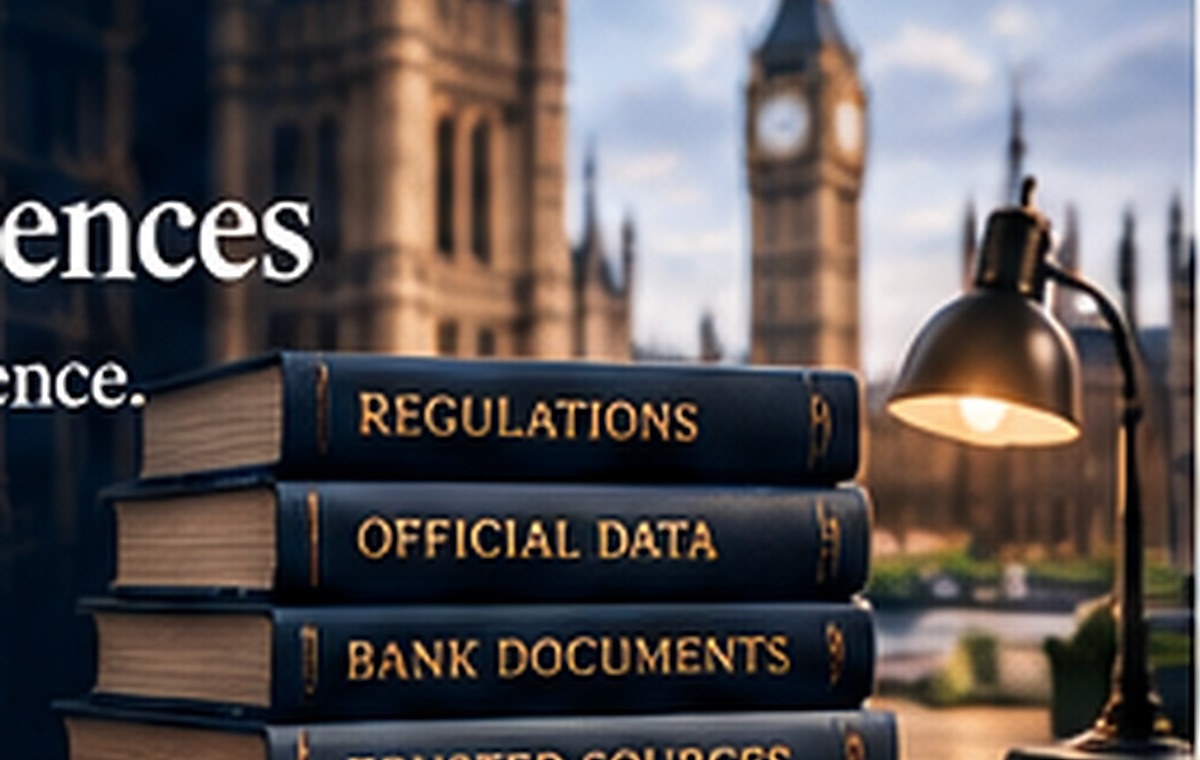
We normally prefer official and first-party evidence. A practical hierarchy is: regulators and government bodies for rules; payment-system operators for scheme processes; banks and providers for their own products and procedures; reputable specialist or news sources for context and recent developments.
2. Regulators and public bodies
Frequently relevant institutions include the Financial Conduct Authority, Bank of England, Financial Services Compensation Scheme, Financial Ombudsman Service, HMRC and GOV.UK. The most appropriate body depends on the subject.
3. Banks and providers
Provider websites, terms, tariffs, help centres, app guidance and customer-service documentation are important for fees, limits, eligibility and operational processes that can differ from one bank to another.
4. Payment systems and industry bodies
For payment mechanics and switching processes, we may use sources such as Pay.UK, the Current Account Switch Service and other scheme operators or recognised industry bodies.
5. Dates and freshness
A newer document is not automatically more authoritative, but time-sensitive facts should be checked against the current version of the relevant primary source. Archived or historical material is labelled when it is used for context.
6. When sources disagree
We look at authority, scope, date and exact wording. A generic rule can coexist with a provider-specific exception. When the conflict matters to the answer, we describe it instead of forcing a false single conclusion.
7. Secondary sources and reader reports
News reports, specialist publications, forums and reader reports can help identify issues, but they should not be the sole basis for important factual claims when primary evidence is available.
8. Source corrections
If you find a stronger or more current source that changes one of our pages, send it through the Contact page. Useful corrections include the exact page, the disputed statement and the source that supports the change.
Found a source we should review?
Send a source update or correction and tell us which page it affects.